There's a version of a well-stocked kitchen that costs a fortune — specialty oils, imported cheeses, fresh herbs that wilt before you use them. And then there's the version that actually works: a core set of inexpensive, long-lasting staples that make it possible to throw together a real meal on any given Tuesday night without a last-minute grocery run.
The families who consistently spend less at the grocery store aren't eating worse. They've just figured out which ingredients punch above their weight — delivering flavor, nutrition, and versatility for very little money.
This is that list.
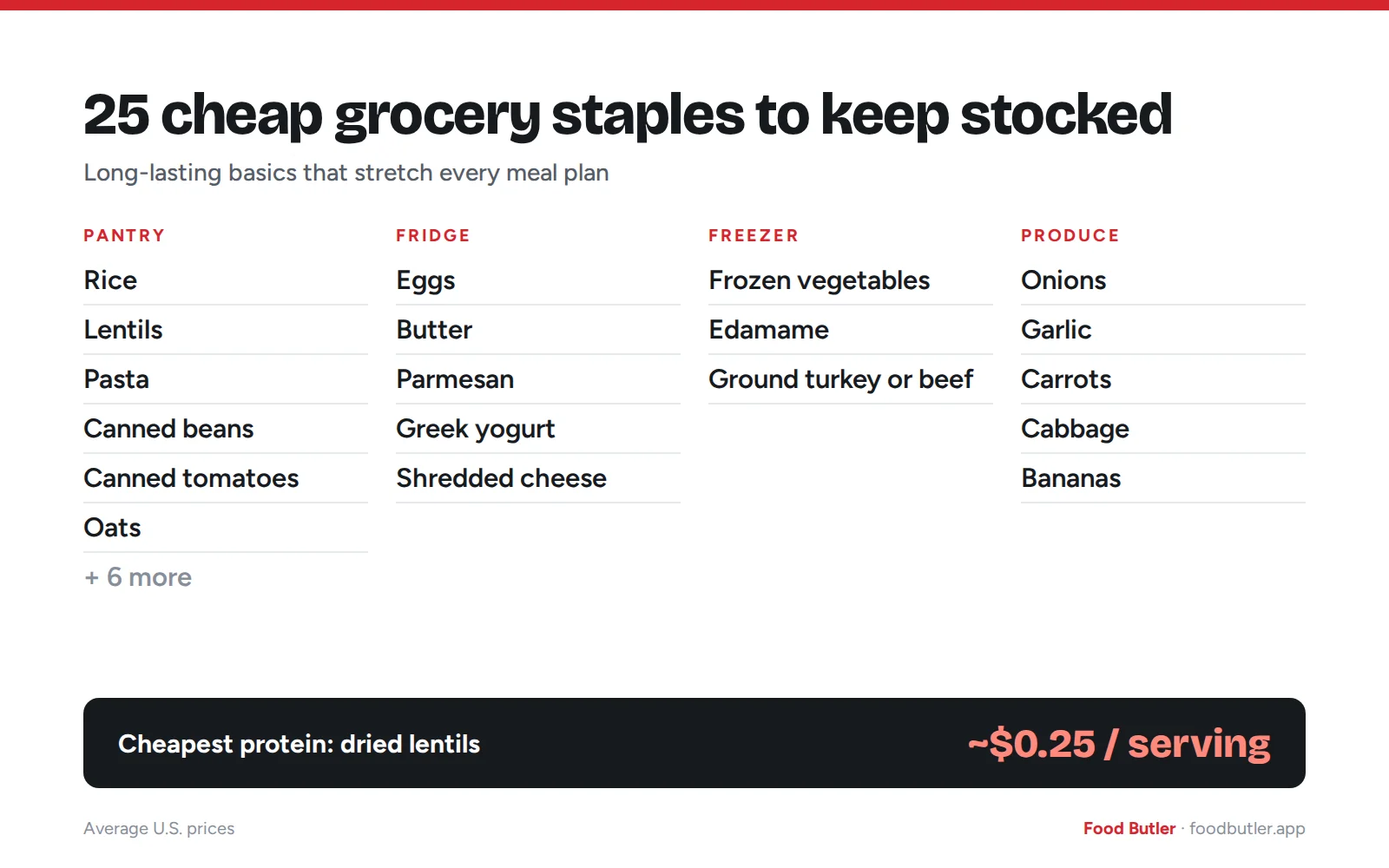
These 25 staples are cheap, shelf-stable or long-lasting, and together they can produce dozens of different meals. Stock these once, replenish as needed, and your baseline grocery bill drops significantly — because you're only ever shopping for the fresh ingredients that complete a meal, not rebuilding your pantry from scratch every week.
The list at a glance
| Staple | Where it lives | Average cost |
|---|---|---|
| Dried rice | Pantry | $1–$2 / lb |
| Dried lentils | Pantry | $1.50–$2.50 / lb |
| Dried pasta | Pantry | $1–$2 / lb |
| Canned tomatoes | Pantry | $1–$2 / can |
| Canned beans | Pantry | $0.80–$1.50 / can |
| Rolled oats | Pantry | $2–$4 / container |
| All-purpose flour | Pantry | $3–$5 / 5 lb |
| Olive oil | Pantry | $6–$10 / bottle |
| Soy sauce | Pantry | $2–$4 / bottle |
| Chicken or vegetable broth | Pantry | $2–$4 / carton |
| Canned coconut milk | Pantry | $1.50–$3 / can |
| Honey | Pantry | $4–$8 / jar |
| Eggs | Fridge | $3–$6 / dozen |
| Butter | Fridge | $4–$6 / lb |
| Parmesan cheese | Fridge | $4–$7 / wedge |
| Plain Greek yogurt | Fridge | $4–$6 / container |
| Shredded cheese | Fridge | $3–$5 / bag |
| Frozen vegetables | Freezer | $1.50–$3 / bag |
| Frozen edamame | Freezer | $2–$4 / bag |
| Frozen ground turkey or beef | Freezer | $4–$7 / lb |
| Onions | Produce | $1–$2 / 3 lb |
| Garlic | Produce | $0.50–$1.50 / head |
| Carrots | Produce | $1–$2 / lb |
| Cabbage | Produce | $1–$2 / head |
| Bananas | Produce | $0.20–$0.30 each |
Pantry staples
1. Dried rice
Average cost: $1–$2 per pound
Rice is the most reliable cheap staple on earth. White rice lasts up to two years in a sealed container. Brown rice has more fiber and lasts about six months. Either way, a $3 bag of rice serves as the base for stir-fries, burrito bowls, fried rice, soups, and simple side dishes all month long. Buy a 5-pound bag and you'll barely notice the cost per serving — usually under $0.20.
2. Dried lentils
Average cost: $1.50–$2.50 per pound
Lentils are the underdog of the budget pantry. They cook in 20–25 minutes without soaking, they're packed with protein and fiber, and a single pound makes enough lentil soup to feed a family of four twice. Red lentils dissolve into creamy soups and curries. Green and brown lentils hold their shape for salads and grain bowls. At around $0.25 per serving, nothing else in your pantry comes close.
3. Dried pasta
Average cost: $1–$2 per pound
A pound of pasta serves four people and costs less than a cup of coffee. Spaghetti, penne, rotini — the shape matters less than having some on hand. Pasta pairs with tomato sauce, olive oil and garlic, butter and cheese, or whatever vegetables need to be used up. It's one of the most flexible cheap ingredients in existence.
4. Canned tomatoes
Average cost: $1–$2 per can
Crushed tomatoes, diced tomatoes, whole peeled tomatoes — a few cans in the pantry means you're never far from a pasta sauce, a base for chili or soup, or a quick shakshuka. Canned tomatoes are often more flavorful than out-of-season fresh tomatoes and last for years. Buy a few cans at a time and you'll almost never run out.
5. Canned beans (black, pinto, chickpeas, kidney)
Average cost: $0.80–$1.50 per can
Canned beans are one of the best value proteins in the grocery store. A can of black beans costs around $1 and contains about three servings of protein. They work in tacos, soups, salads, grain bowls, and dips. Chickpeas roast into a crunchy snack. Kidney beans anchor a pot of chili. Buy a variety and rotate through them — you'll always have a quick, cheap protein ready to go.
6. Rolled oats
Average cost: $2–$4 for a large container
A large container of oats covers weeks of breakfasts for under $4. Oatmeal, overnight oats, homemade granola, oat-based muffins — oats are one of the most economical breakfast staples available. They're also genuinely filling, which matters when you're trying to get a family through to lunch without snacking.
7. All-purpose flour
Average cost: $3–$5 for a 5-pound bag
Flour is the foundation for homemade pizza dough, pancakes, muffins, breading for chicken, and thickening soups and sauces. A 5-pound bag lasts months and costs almost nothing per use. If you're not baking your own bread or pizza dough yet, this one staple can unlock a lot of savings — a homemade pizza costs a fraction of delivery.
8. Olive oil
Average cost: $6–$10 for a standard bottle
Not the cheapest item on this list, but one that earns its place. Olive oil is the starting point for almost every savory dish — sautéing garlic, roasting vegetables, dressing salads, finishing pasta. A mid-range bottle lasts a month or more for most families. Buy it in larger containers when it's on sale and the cost-per-use drops dramatically.
9. Soy sauce
Average cost: $2–$4 per bottle
A bottle of soy sauce lasts months in the fridge and is the backbone of stir-fries, marinades, fried rice, and dipping sauces. It's one of those ingredients that adds more flavor per penny than almost anything else in the store. Low-sodium versions work just as well if you're watching salt intake.
10. Chicken or vegetable broth
Average cost: $2–$4 per carton
Broth transforms soups, rice, and pan sauces. Cooking rice in broth instead of water costs maybe $0.50 more and makes a noticeable difference. A carton opened in the fridge lasts about a week, or buy shelf-stable tetrapaks and they last indefinitely. Keep two or three on hand.
11. Canned coconut milk
Average cost: $1.50–$3 per can
One can of coconut milk turns a simple chicken and vegetable situation into a Thai curry or coconut rice dish. It's one of those pantry items that makes cheap ingredients taste like you actually tried. Pairs with soy sauce, lime, garlic, and ginger for a sauce that works over rice with almost any protein.
12. Honey
Average cost: $4–$8 per jar
Honey lasts indefinitely, sweetens oatmeal and yogurt, glazes roasted carrots and salmon, and balances savory sauces. A jar lasts months and costs almost nothing per use. It can also stand in for sugar in many recipes, making it genuinely versatile.
Refrigerator staples
13. Eggs
Average cost: $3–$6 per dozen
Eggs might be the single most versatile cheap protein in existence. Scrambled, fried, poached, hard-boiled, baked into frittatas, stirred into fried rice — eggs solve the "I need protein and I have 10 minutes" problem better than anything else. They keep for 3–5 weeks in the fridge. At $0.25–$0.50 per egg, a dinner for four costs under $2 in protein alone.
14. Butter
Average cost: $4–$6 per pound
Butter makes vegetables taste better, improves pasta sauces, and is essential for baking. A pound of butter lasts a family several weeks. The off-brand versions are identical to the name brands — don't pay a premium for the label.
15. Parmesan cheese
Average cost: $4–$7 for a block or wedge
A small block of Parmesan grated over pasta, soup, or roasted vegetables adds a depth of flavor that's hard to replicate cheaply. A little goes a long way — a $5 wedge can last two to three weeks. Buy the block, not the pre-grated canister, which usually contains anti-caking additives and costs more per ounce.
16. Plain Greek yogurt
Average cost: $4–$6 for a large container
Greek yogurt works as breakfast, a sour cream substitute (at half the fat and twice the protein), a base for marinades, and a topping for tacos and grain bowls. A large container serves multiple purposes across the week, which is exactly what you want from a fridge staple.
17. Shredded cheese
Average cost: $3–$5 per bag
Mexican blend, mozzarella, or cheddar — a bag of shredded cheese is a weekly staple that goes on tacos, pizza, pasta bakes, quesadillas, and scrambled eggs. Buying the store brand versus the name brand saves $1–$2 per bag with no difference in quality.
Freezer staples
18. Frozen vegetables (broccoli, peas, corn, mixed)
Average cost: $1.50–$3 per bag
Frozen vegetables get an unfair reputation. They're picked and flash-frozen at peak ripeness, which means they're nutritionally comparable to fresh — often better than "fresh" vegetables that spent two weeks in transit. They don't go bad before you use them, they're 40–60% cheaper than fresh, and a bag of frozen broccoli or mixed vegetables can rescue any dinner that needs a vegetable component.
19. Frozen edamame
Average cost: $2–$4 per bag
Edamame is a complete protein, takes five minutes to cook from frozen, and works as a side dish, a salad topping, or a snack. It's one of the best value protein sources in the freezer aisle, and most families overlook it entirely.
20. Frozen ground turkey or beef
Average cost: $4–$7 per pound
Buying ground meat in bulk when it's on sale and freezing it is one of the easiest grocery budget moves. A pound of ground turkey or beef thaws in a few hours and becomes tacos, pasta sauce, meatballs, or stir-fry. Having it in the freezer means you always have a cheap protein option without a dedicated shopping trip.
Produce that lasts
Not all fresh produce is equal when it comes to shelf life. These items last long enough to be genuinely useful across a full week of cooking.
21. Onions
Average cost: $1–$2 for a 3-pound bag
Onions last 2–3 months stored properly and are the aromatic foundation of almost every cuisine on earth. Soups, stir-fries, tacos, pasta sauce, roasted vegetables — onions are in nearly everything. A bag costs almost nothing and goes a long way.
22. Garlic
Average cost: $0.50–$1.50 per head
A head of garlic lasts 1–2 months unpeeled and is the most flavor per penny of any ingredient in the produce section. If you're cooking with olive oil, you're almost certainly starting with garlic.
23. Carrots
Average cost: $1–$2 per pound
Carrots last 2–3 weeks in the fridge and are one of the most versatile cheap vegetables. Roasted, steamed, added to soups and stews, eaten raw with hummus — carrots are dependable, filling, and cheap. A bag of baby carrots also doubles as a grab-and-go snack that keeps kids out of the less healthy options.
24. Cabbage
Average cost: $1–$2 per head
A head of cabbage lasts 1–2 weeks in the fridge and is enormous value. Shredded into tacos, sautéed with butter and garlic, added to soups or stir-fries, tossed into slaw — cabbage is one of the most underrated budget vegetables. A single $1.50 head can provide vegetable servings across three or four different meals.
25. Bananas
Average cost: $0.20–$0.30 per banana
Bananas are the cheapest fruit in most grocery stores, they're filling, kids eat them without complaint, and overripe ones go straight into the freezer for smoothies or banana bread. They're one of those staples that earns its place in every single weekly shop.
How to use this list
Stocking these 25 items doesn't mean buying all of them every week. The goal is to always have most of them on hand so that your weekly shopping is lighter — you're filling gaps, not starting from scratch.
A practical approach: do a quick pantry scan before you shop each week. Note what's running low. Buy those items plus whatever fresh proteins and produce you need to complete your meal plan. That's the whole system.
When you combine a stocked pantry with a concrete weekly meal plan, something interesting happens: your grocery trips get shorter, your cart gets smaller, and your bill drops — not because you're eating worse, but because you stopped wasting money on things you didn't plan to buy.
The families spending $250+ a week at the grocery store aren't buying better food. They're buying unplanned food. A pantry full of the best cheap grocery staples, paired with a meal plan built around them, is how you fix that.
Frequently asked questions
What groceries should I always keep stocked?
Long-lasting, versatile basics: rice, lentils, pasta, canned tomatoes and beans, oats, flour, olive oil, soy sauce, and broth in the pantry; eggs, butter, and cheese in the fridge; frozen vegetables and ground meat in the freezer; and onions, garlic, carrots, cabbage, and bananas from the produce aisle.
What is the cheapest protein to keep in the pantry?
Dried lentils, at around $0.25 per serving. Canned beans (about $1 for three servings) and eggs ($0.25–$0.50 each) are close behind.
How long do pantry staples last?
White rice lasts up to two years in a sealed container, brown rice about six months, and canned tomatoes for years. Onions keep 2–3 months, garlic 1–2 months, eggs 3–5 weeks in the fridge, and cabbage 1–2 weeks.
Is it cheaper to keep a stocked pantry?
Yes. With the staples on hand, each weekly shop only covers the fresh ingredients that complete your planned meals, so you skip impulse buys and duplicate purchases.